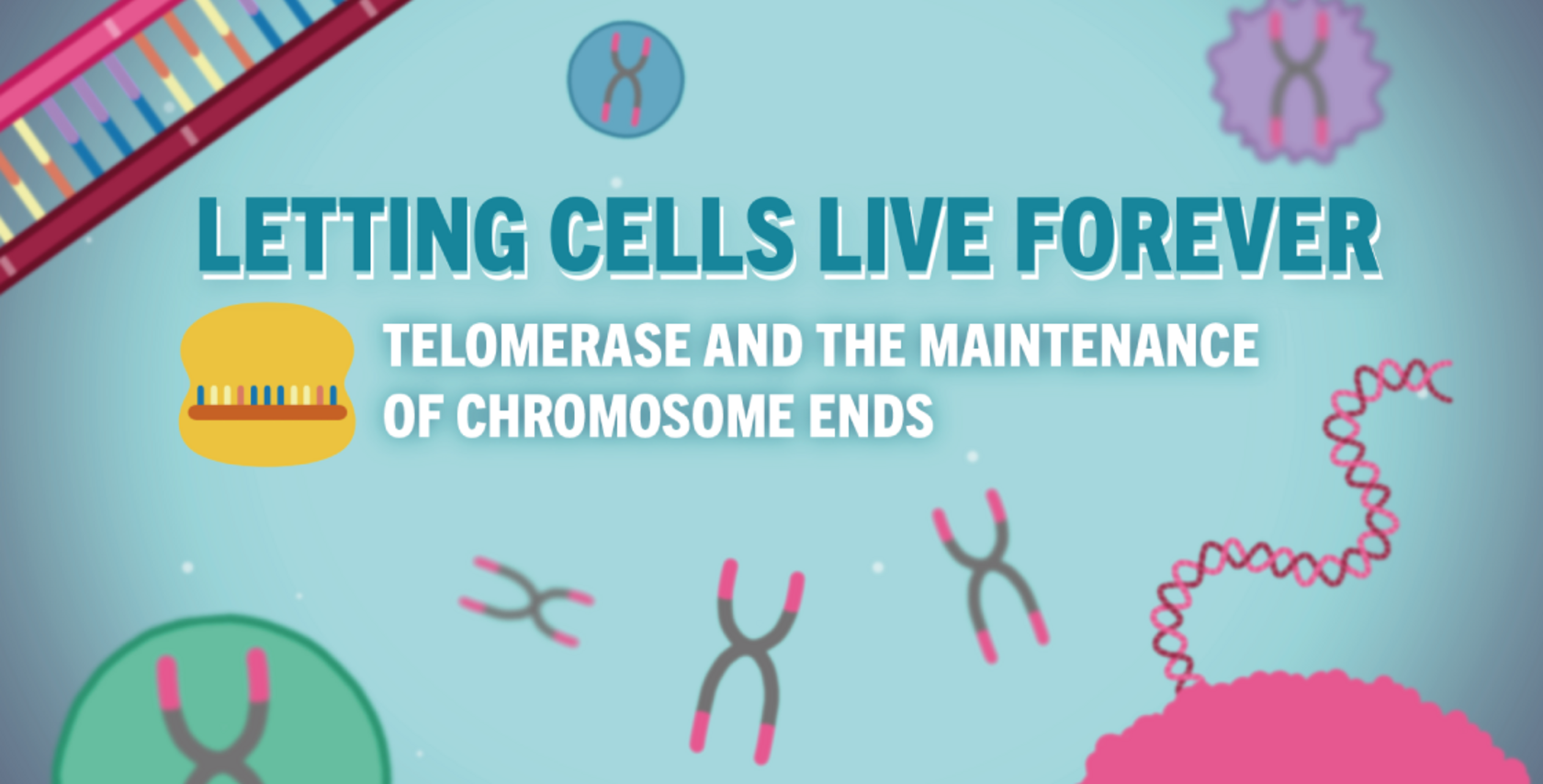
The sixth video released of the “RNA Explained Series”, is on telomerase, and its role in health and disease. For its discovery, the 2009 Nobel Prize in Physiology or Medicine was awarded.
Why do we age, and why do some cells seem to live forever? The secret is hidden at the tips of our chromosomes in protective caps called "telomeres."
Every time a cell divides, it must copy its DNA, but with each division, a small piece of DNA is lost. Over time, these telomeres wear down until the cell can no longer divide. However, nature has a solution: telomerase. This remarkable enzyme acts like a cellular rebuilder, adding DNA back to the ends of chromosomes to keep them from shrinking.
For the landmark discovery of how chromosomes are protected by telomeres and the enzyme telomerase, Elizabeth Blackburn, Carol Greider, and Jack Szostak were awarded the Nobel Prize in Physiology or Medicine in 2009.
In this video, we dive into the fascinating mechanics of telomerase. Discover how it uses a built-in RNA template to add DNA repeats, why it is essential for our stem cells to divide for decades, and how its "hijacking" by cancer cells makes them effectively immortal.