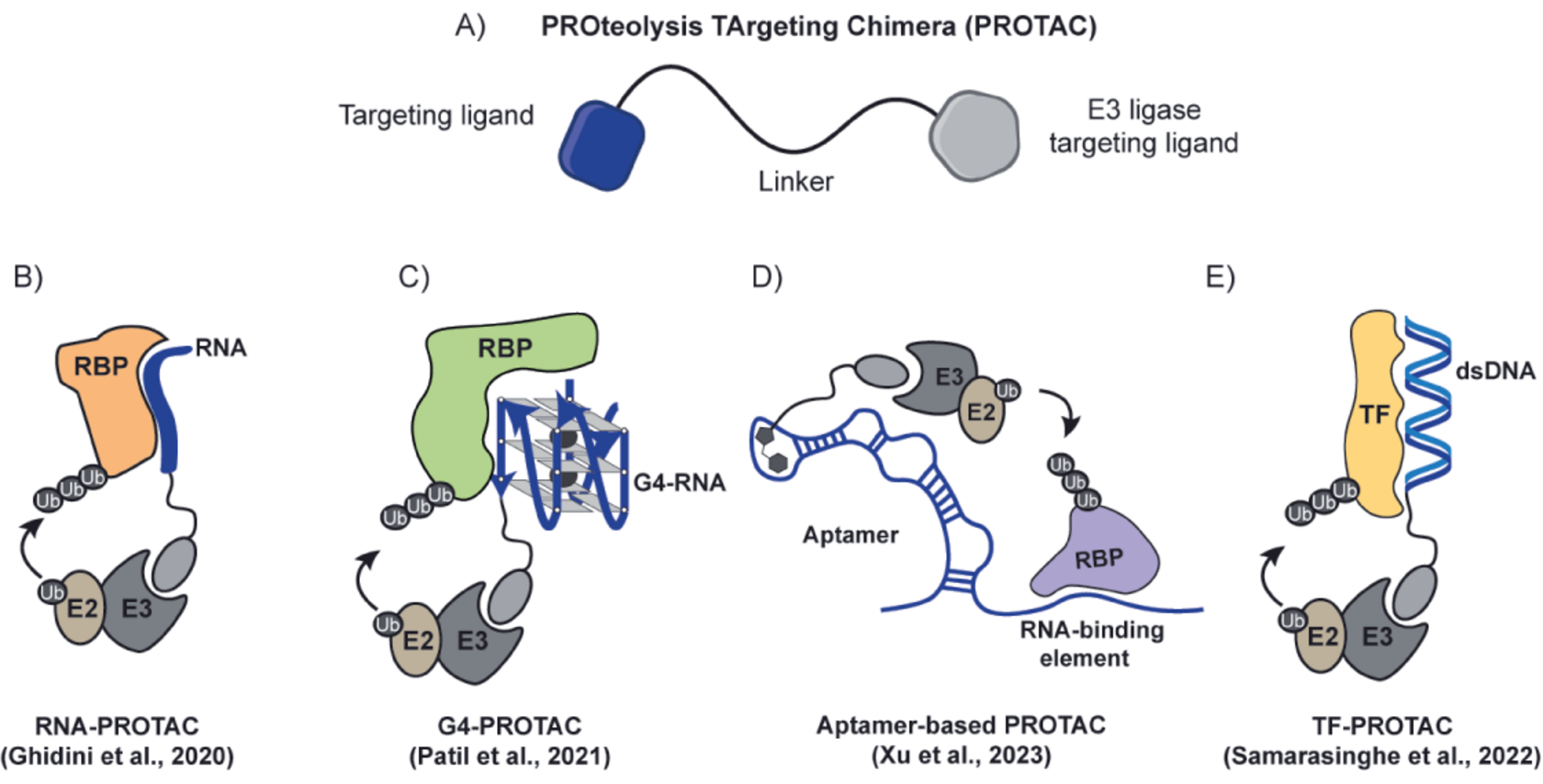
RNA- and DNA-binding proteins have been hard to inhibit by the use of small molecules. An alternative approach is to use Oligonucleotide-based PROTACs to induce their degradation via ubiquitination and degradation by the cellular machinery. The Hall Lab has published a review on this topic entitled "Oligonucleotide-based PROTACs to Degrade RNA- and DNA-Binding Proteins" in Chimia.
Abstract
Proteolysis targeting chimeras (PROTACs) are heterobifunctional molecules that sequester the endogenous protein degradation machinery of cells to induce degradation of targeted proteins. By bringing a target protein and a ubiquitin E3 ligase into close proximity, ubiquitin monomers can be transferred onto surface lysines of the protein, which is subsequently degraded by the proteasome. The functions of RNA- and DNA-binding proteins have been especially hard to modulate with small molecules. However, oligonucleotides that bind RNA- or DNA-binding proteins can be turned into oligonucleotide-based PROTACs to direct ubiquitination and degradation of these proteins. Here we summarize the current state of the field of oligonucleotide-based PROTACs that target RNA- or DNA-binding proteins.
Read the Review in Chimia (Open Access)
Abstract, figure and title from Weller and Hall (2025) Chimia published under a CC BY 4.0 license.